Online Training
Diploma in design and construction of railway infrastructure

120 hours


English
Educational institutions

450€
Request information


Online Training
120 hours
English
Educational institutions
Request information
Multilingual support
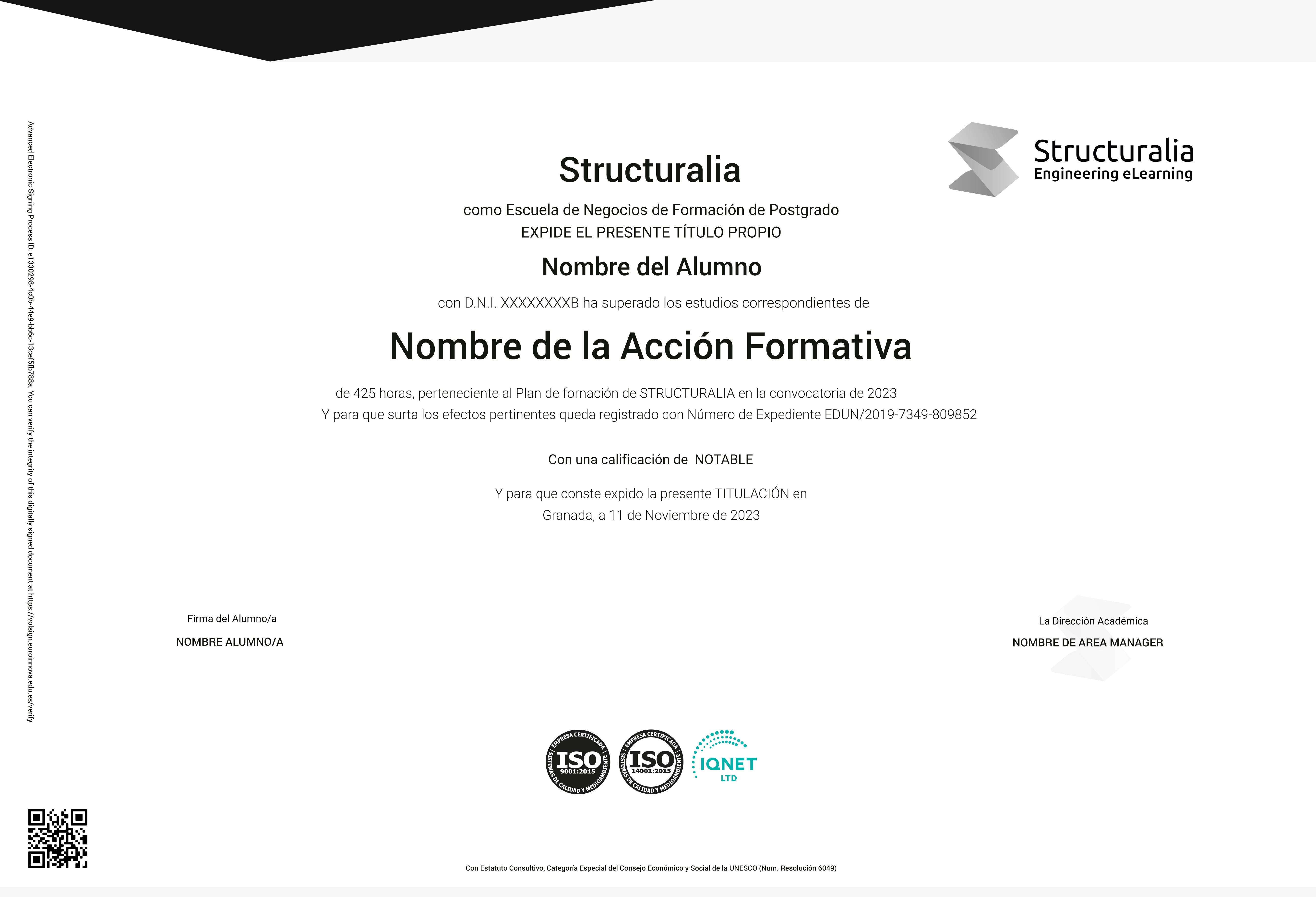
Digital certificate included
Assistant Phia
The general objective of this program is to develop the student's capabilities in different technical and management disciplines necessary for the design, construction and maintenance of railway systems and structures. The specific objectives associated with this program are: - Learn the aspects related to the management of the construction of railway lines, as well as those related to the modernization of existing lines in terms of legal restrictions, infrastructure financing, environmental management, relationship with suppliers, etc. - Learn the main specific parameters necessary to design and write railway infrastructure projects, whether conventional, high-speed, metro or tram lines. - Address the technical aspects related to civil works involved in the construction of railway infrastructure such as viaducts, tunnels, earthworks, leveling, etc. - Learn the current specifications necessary for the design and construction of railway systems in relation to track superstructures, electrification, substations, signaling, communications, etc. - Have extensive knowledge of the transversal aspects of railway maintenance management, such as quality, environment, safety, railway maintenance models developed by different European countries. - Study the different maintenance techniques for track infrastructures and superstructures, welding inspection and maintenance, expansion device regulations, etc. - Learn maintenance techniques applied to electrification installations such as catenary, substations, grounding installations, etc. - Analyze and apply maintenance knowledge of railway signaling systems: CTCs, interlockings, blockades, automated level crossings, etc. - Learn maintenance techniques applied to telecommunications and information systems of railway networks. - In relation to each of the specialties (High Speed or Urban Railways), its objectives are for the student to learn the specific particularities in the Design, Construction and Maintenance of railway infrastructures in these two fields.
Once this certification program is completed, the student will be able to apply for different positions in the railway sector. There are a wide variety of career opportunities related to railway design and construction, as well as infrastructure maintenance. In addition, other opportunities are offered such as project designer/author, railway specialist, railway technician, production manager, construction manager, technical support manager or construction manager, track technologist, railway consultant, maintenance base technician, maintenance manager, railway systems auditor, etc. Please note that these opportunities will also be based on previous qualifications and years of experience in the sector, which, together with the different skills and knowledge acquired throughout this program in design, construction and maintenance of railway infrastructure, superstructures, energy, telecommunications and signalling, will be multiplied.
This certification program provides you with the knowledge and skills necessary for the design and construction of railway infrastructure. Upon completion, you will be able to effectively manage railway projects, design platforms, tunnels, bridges and viaducts, as well as manage track layout, materials and assembly. In addition, you will understand railway electric traction, overhead contact lines and energy subsystems for high-speed, metro and tram systems.