Online Training
Diploma in International Trade and Logistics

500 hours


Spanish
Educational institutions

750€
Request information


Online Training
500 hours
Spanish
Educational institutions
Request information
Multilingual support
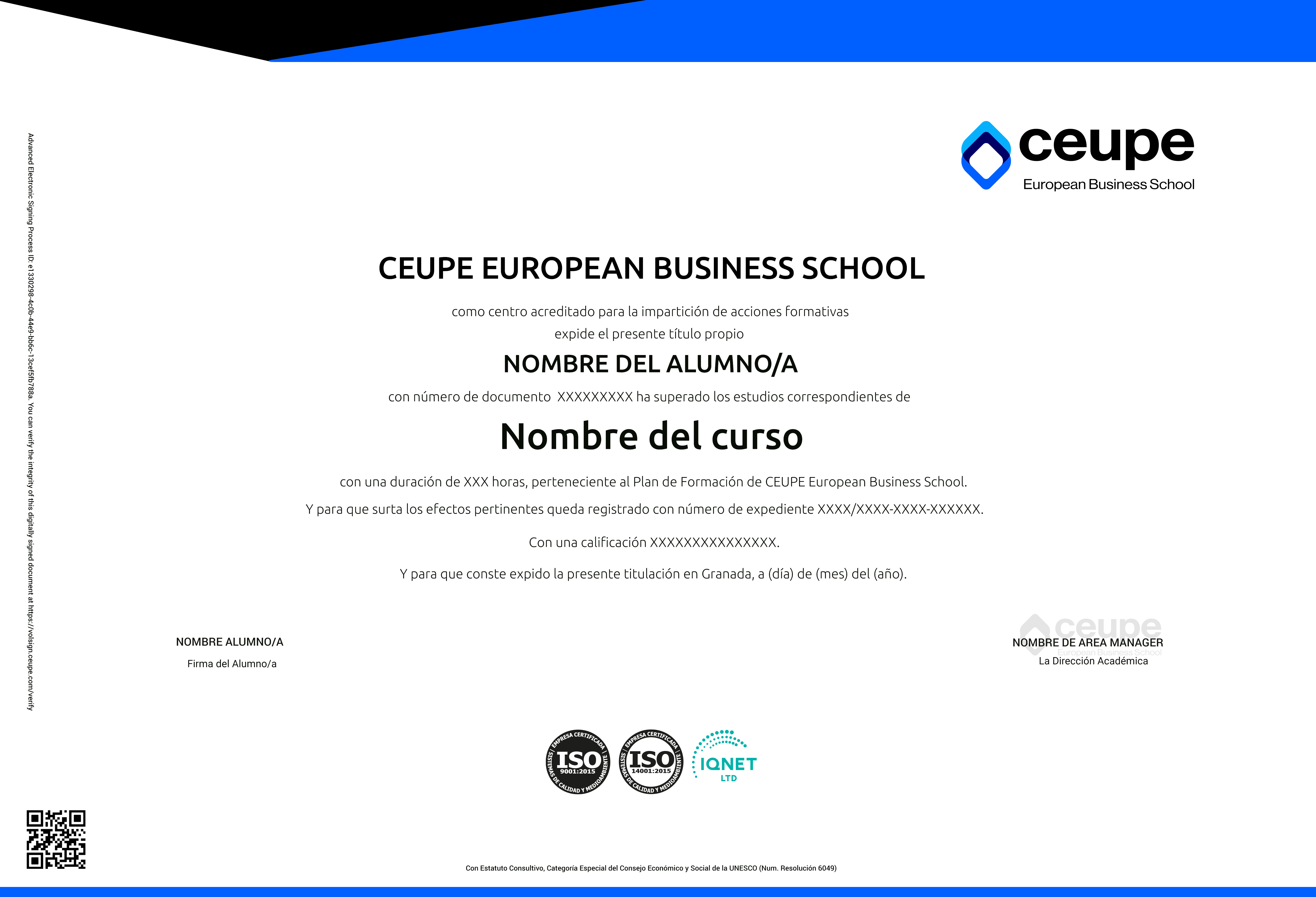
Digital certificate included
Assistant Phia
With the Online Foreign Trade Course, the student will be able to analyze, synthesize and develop key proposals, to address the different business areas that directly and globally affect international trade and the logistics sector. In such a globalized business and professional society, it is vital to provide attendees with a focus on internationalization, multiculturalism and practice on how to run a multinational or internationally marked organization. At the same time, it aims to provide practical tools to carry out management tasks related to foreign trade and logistics management.
1. International market analyst in important multinational companies. 2. Expert in international markets to develop strategies in the internationalization process. 3. Specialist capable of analyzing international markets and applying business strategies in the expansion of international marketing companies. 4. Profile with academic experience in international business, focused on electronic commerce to serve the global market. 5. Professional knowledgeable about the legal and commercial aspects of the different international markets in ports of embarkation and disembarkation of goods.
This Diploma in International Trade and Logistics prepares students to manage and optimize global trade processes and the international supply chain. Some of the skills and knowledge you will acquire: 1. International Trade • Regulations and Standards: Understand the laws, treaties and regulations that govern international trade. • Trade Agreements: Knowledge of the main trade agreements and their impact on global businesses. 2. International Logistics • Supply Chain Management: Planning and management of logistics operations, including storage, transportation and distribution. • Information Technologies: Use of systems and software to optimize logistics and the supply chain. 3. Risk Management • Commercial Risks: Identification and mitigation of risks associated with international trade. • Logistics Risks: Strategies to manage risks in global logistics, such as supply chain disruptions. 4. International Transportation • Modes of Transportation: Knowledge of the different modes of transportation (sea, air, land) and their efficient management. • Transportation Regulations: Compliance with international transportation regulations. 5. Customs and Foreign Trade • Customs Procedures: Understand customs processes and the documentation necessary for import and export. • Clearance Management: Efficiency in the management of customs clearance and compliance with regulations. 6. Technologies in Logistics • Automation and Digitalization: Application of emerging technologies such as IoT, blockchain and big data in logistics. • Logistics Information Systems: Use of ERP and SCM systems for supply chain management. 7. Strategy and Planning • Strategic Planning: Development of strategies for expansion and competitiveness in international markets. • Process Optimization: Continuous improvement and optimization of logistics and commercial processes. 8. Sustainability and Social Responsibility • Green Logistics: Implementation of sustainable practices in the supply chain. • Social Responsibility: Promotion of ethics and social responsibility in international trade and logistics. 9. Professional Development • Network of Contacts: Opportunities to establish a network of professional contacts internationally. • Practical Experience: Participation in projects and real case studies in commerce and logistics.