Online Training
MBA + Specialty - Political Marketing

16 months


Spanish
Educational institutions

1.690€
Request information


Online Training
16 months
Spanish
Educational institutions
Request information
Multilingual support
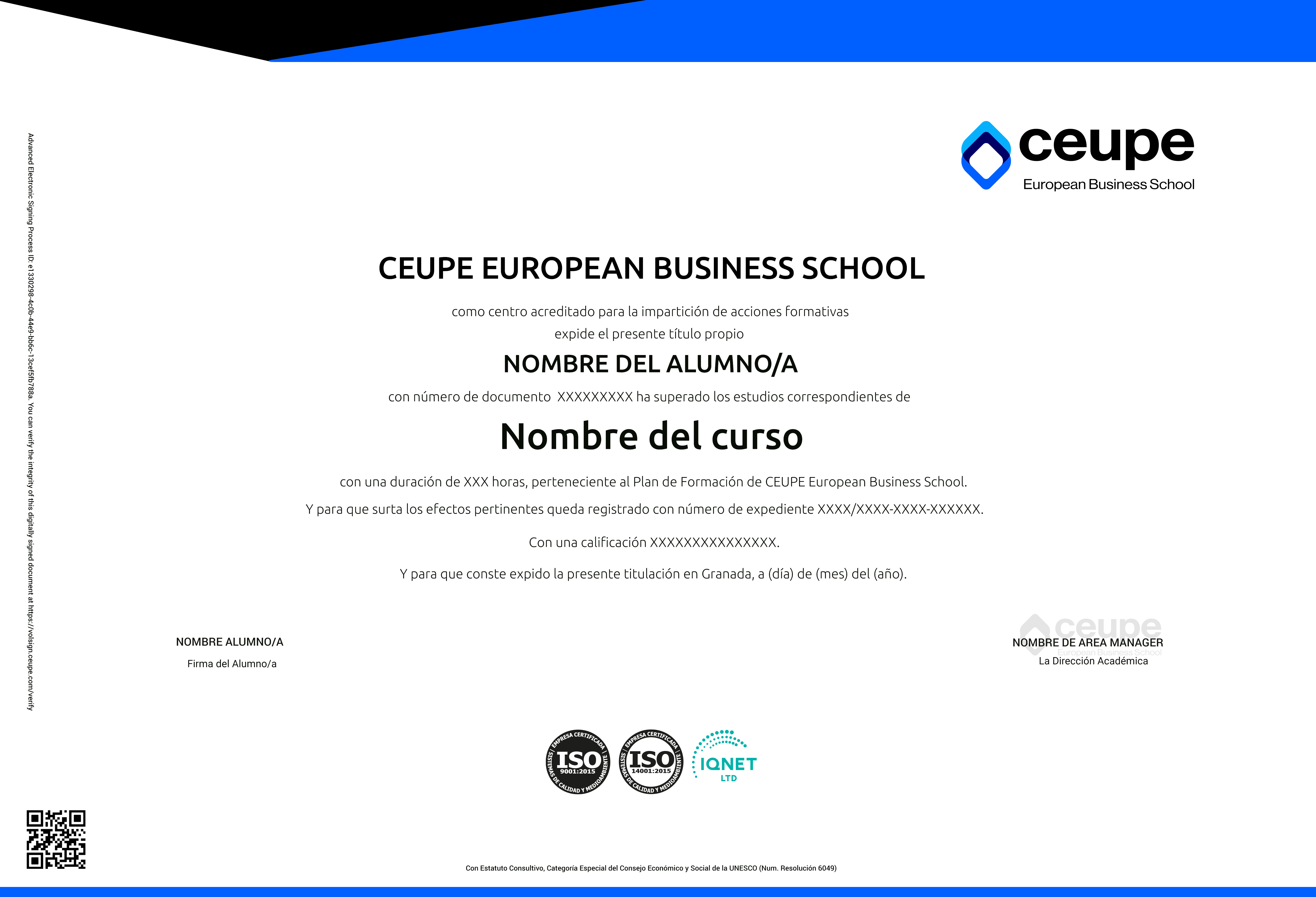
Digital certificate included
Assistant Phia
- Acquire a comprehensive vision of political marketing to adapt it to actors, audiences and scenarios using the techniques applicable to each of them. - Contribute with global training in political marketing to the political consulting sector. - Develop a strategic approach to carry out your professional activity in the political communication and marketing sector.
- Director of political consulting and advisory services - Director of electoral campaigns - Directors of institutional, corporate and political communication offices. - Communication directors of public institutions, political parties and governments. - Managers of Communication and Public Relations Agencies - Director of Image Consulting for political campaigns. - Director of Communications Agencies specialized in the political sector.
The MBA master's degree with a specialty in Political Marketing prepares you to assume leadership and management roles in the political field, providing advanced knowledge in business administration combined with specific skills in political strategy and communication. This program trains you to design, implement and manage effective political campaigns, as well as to advise candidates and political parties on communication and electoral strategy issues. Some of the skills and knowledge that the student can acquire 1. Business Management - Leadership Skills: You will develop skills to lead teams, make strategic decisions and manage resources efficiently. - Business Administration: You will learn about the various functional areas of an organization, including finance, human resources, operations and marketing. 2. Political Strategy and Communication - Electoral Strategy: Development of electoral strategies for political campaigns, including competitor analysis, voter segmentation and message planning. - Political Communication: Effective communication techniques to transmit political messages, manage the image of candidates and create persuasive narratives. 3. Digital Marketing and Social Networks - Digital Marketing in Politics: Use of digital platforms and social networks to promote candidates and political parties, interact with voters and mobilize support. - Social Media Management: Strategies to manage social media profiles, create engaging content and monitor online reputation. 4. Research and Data Analysis - Market Research: Methods to investigate and analyze the opinions and behaviors of voters, using surveys, focus groups and data analysis. - Data Analysis: Use of data analysis tools to interpret electoral trends, measure the impact of campaigns and adjust strategies. 5. Advertising and Media - Political Advertising: Development of advertising campaigns in traditional and digital media, including the creation of television, radio and online advertisements. - Media Relations: Techniques to manage relations with the media, prepare press releases and organize press conferences. 6. Electoral Campaign Management - Campaign Planning: Skills to plan, coordinate and execute electoral campaigns, including management of time, resources and volunteers. - Mobilization Strategies: Techniques to mobilize voters, organize events and encourage electoral participation. 7. Crisis Management - Crisis Management: Strategies for managing political crises, including preparing contingency plans and managing communication during adverse situations. - Reputation and Image Management: Skills to protect and improve the public image of candidates and political parties. 8. Ethics and Social Responsibility - Ethics in Politics: Understanding ethics in political practice, including transparency, accountability and respect for voters' rights. - Social Responsibility: Implementation of social responsibility practices in political campaigns, promoting the common good and sustainable development. 9. Innovation and Trends in Political Marketing - Current Trends: Stay up to date on the latest trends and technologies in political marketing, such as the use of artificial intelligence and big data. - Innovation in Campaigns: Application of new techniques and tools to innovate in the management and execution of political campaigns. 10. Professional Development - Network of Contacts: Opportunities to establish a network of professional contacts in the political field, including fellow students, professors and professionals in the sector. - Practical Experience: Participation in practical projects and internships in campaigns policies and communication consultancies, acquiring real experience in the field of political marketing.